The Dashboard You Bolted Onto the Old ERP Is Now a Shadow System
Nobody approves a shadow system. It grows one reasonable afternoon at a time, from a single dashboard into the thing your production meeting runs on. The vacation test tells you whether you own a time-saver or a mission-critical system nobody else can fix, and why you shouldn’t rip it out either way.
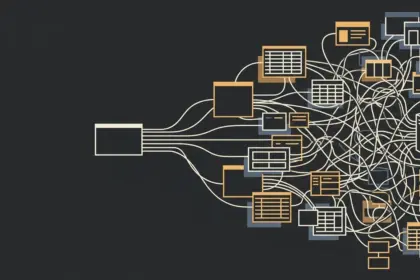
Some companies decide to build a custom ERP. It’s a real decision, with a scope and a budget, and occasionally it’s the right one. I’ve recommended it myself, for a company whose needs were specific enough that nothing off the shelf was going to fit. This is about the version nobody decides on: the shadow system you ended up with because you wanted to see your numbers.
The old system can tell you what shipped yesterday. It can’t tell you which customers are making you money, or it can, through a report that takes forty minutes to run and prints in a font last updated in 1998. So somebody fixes it. Maybe it’s the controller who’s good with Excel, or a contractor who came in for a week, or the person every growing company eventually turns into “the systems person” without anyone saying so out loud.
They pull an export and build a dashboard. For the first time in years, you can see margin by customer on one screen. It’s a good day, and you’re right to feel good about it.
It Never Stays a Dashboard
Trouble starts with the second request. Sales wants the same view by rep, and purchasing wants open POs sitting next to it. Somebody notices the export only runs when a person clicks a button, so it gets scheduled to run overnight on a server in the back room. Then a spreadsheet starts reading from the export, a second spreadsheet starts reading from the first, and the weekly production meeting now runs off a file that didn’t exist three years ago.
Every step was reasonable. Most took an afternoon. Nobody ever approved a project, because there was never a project to approve.
I watched this play out in public recently. A new GM at a family-run gas distributor, around $50 million and forty people on a legacy ERP, asked an online forum where to start. A lot of the replies weren’t about the ERP at all. They were warnings about the layer of dashboards and exports people had stacked on top of it, and how that layer turns into a half-custom system one developer understands, with the company’s data sitting on a remote desktop server someone set up years ago.
That’s the part I’d worry about. Not the old ERP. The thing growing beside it.
You Own Something You Never Bought
Think about what you’d demand before signing off on a new system. You’d want requirements, a budget, some documentation, a plan for when it breaks at 6 AM on a Monday, and at least two people who know how it works.
The shadow system has none of that. Meanwhile it’s carrying decisions you’d never let ride on a guess: pricing, reorder points, which customers get attention. You’re maintaining custom software. You just never scoped it, never budgeted for it, and never picked who’d be responsible for it. It picked them.
The risk isn’t that it’s bad. It usually works fine, which is precisely why nobody looks at it. The risk is that everything about it lives in one head.
The Vacation Test
You can find out where you stand in about thirty seconds. Pick the report your team leans on hardest and imagine it breaks on the Monday the person who built it leaves for a week in Florida.
Who do you call? You’ll probably come up with a name. Maybe it’s your IT guy, or the managed services company you call when the printers act up. Now ask the second question: would that person have a clue where to start? They may be perfectly capable. Capable isn’t the issue. The issue is whether they know where the export lives, what kicks it off every night, and which spreadsheet feeds which. And why the formula in K7 multiplies the total by 0.97.
Maybe they wouldn’t, and it doesn’t matter. If you’d pull the numbers straight from the ERP and live with a clunkier week, you’re fine. What you have is a dashboard that saves time and effort, which is exactly what it was built to be.
If the plan is to text your team member while they’re on the beach with their kids, you have a mission-critical shadow system. Having someone to call isn’t the same as having someone who knows.
Having someone to call isn’t the same as having someone who knows.
You don’t always get to run the test on your own schedule. Sometimes the ERP vendor pushes an update, Tuesday’s numbers come out wrong, and it takes a week to discover an export changed format. Other times you start talking with a buyer or an investor, diligence asks where your operating data lives, and the real answer involves a desktop under somebody’s desk.
That last one matters more than it sounds. I’ve asked owners the same question for years: what would you pay more for, a box of LEGO blocks, or a full LEGO set complete with instructions? An undocumented shadow system is the box of blocks. Everything you need might be in there. A buyer still can’t tell, and they’ll price it accordingly.
Don’t Rip It Out
The reflex at this point is to blame the old ERP and start shopping for a new one. I’d slow down.
That shadow system is the most useful requirements document your company owns. Nobody wrote it as one, but every tab, every export, and every workaround spreadsheet records something the business needed to know that the ERP couldn’t tell it. That’s the list any vendor should be measured against. It’s also the list most companies don’t have when the vendor walks in.
So treat it like a system, because it is one. Find out what it touches, meaning which reports, which meetings, and which decisions run on it. Get what’s in that one person’s head written down while they’re still glad to share it, and bring a second person close enough to keep it running. Then make a deliberate call on each piece. Some of it deserves to be owned properly, with a budget line and a backup. Some of it should move into the ERP, whichever ERP that ends up being. Some of it is dead weight nobody has opened since 2021.
None of this requires replacing anything this quarter. It requires deciding that the thing your business runs on is something you own on purpose.
The person who built it did you a favor. They saw a gap and filled it, probably on their own time. The mistake wasn’t theirs. It was letting a favor quietly become infrastructure without anyone deciding it should.
If you want a quick read on how many of these patches your business is carrying, and where they sit, the QUILT Check takes about ten minutes:
Contents
Tags
Next Article

AI Is Never Allowed Near the Price
Someone building AI quoting for wholesale distributors shared what actually went wrong. Two lessons stand out for any owner being pitched AI: decide which steps it never touches alone, and judge its accuracy in the unit you pay people to handle.